
 Interactive Installation
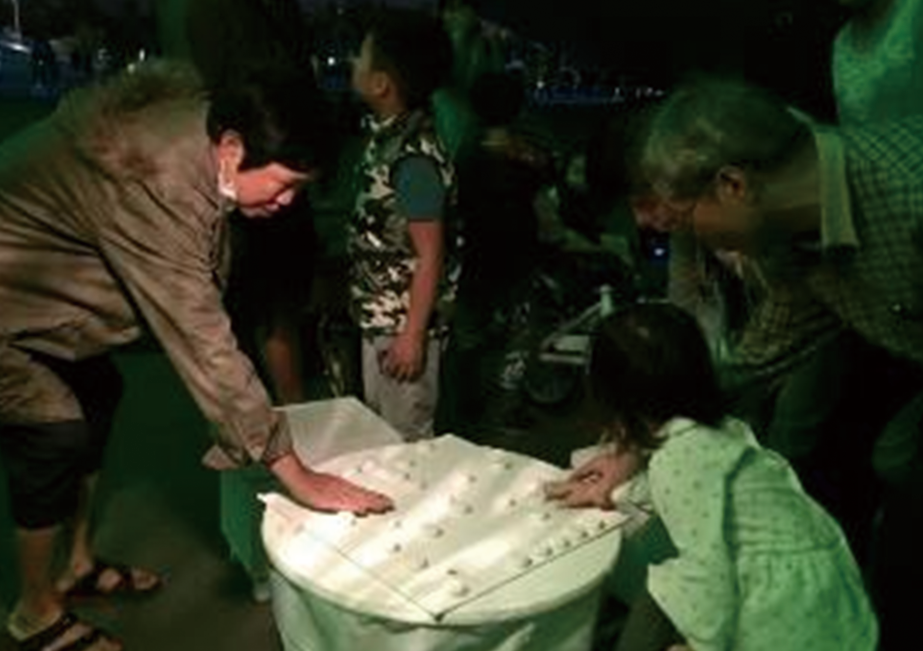
In addition to the video mapping show and live performance, the team created a playground under the banyan tree in the semi-open space of the building for the audience. The playground was set up with a new media installation, presenting the fun time of playing under the banyan tree in old age, and interpreting the past of people drinking tea, chatting, and playing chess under the big tree. It is a common good time in people’s memory. This creation had overcome various difficulties, tried to remove the coldness of modern exhibition technology, combined with the architectural field, and sincerely told a beautiful story full of warmth, full of cultural memories of the land, and humanistic emotions!
➤ Underground.pkg
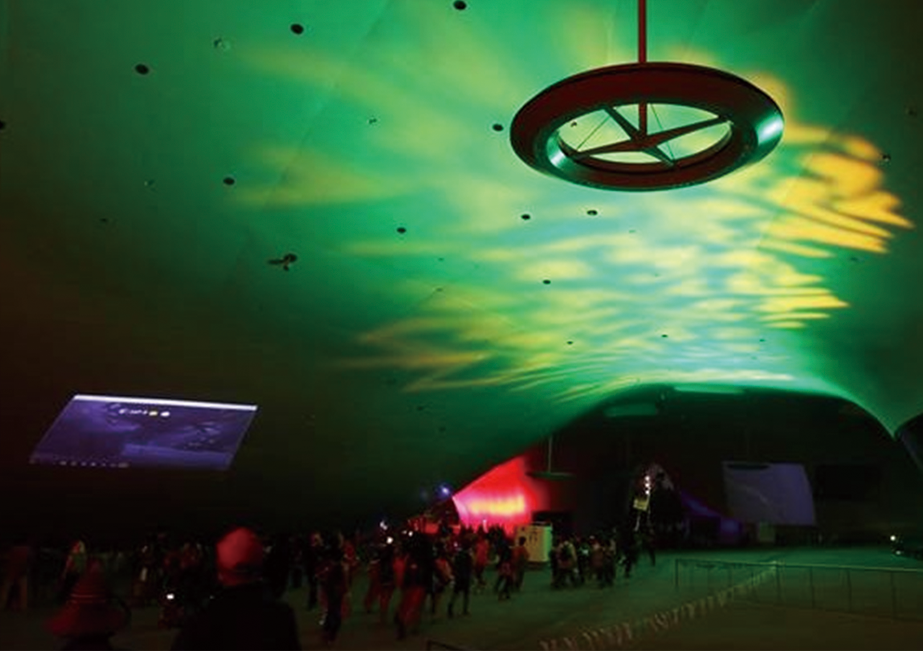
In childhood, game-like “playing tag” under the banyan tree has always been everybody’s shared memory. In the digital multimedia era of the 21st century, standing under this art center designed as a banyan forest, we have transformed our childhood game into a new generation of games that are intertwined with reality and virtuality.
1 VR player (ghost) vs 3 scooter players (runner), chasing in the underground. What the VR player sees is a virtual underground tree hole world, chasing the scooter players who turn into a ball of light. Here seems to carry a kind of common memories that travel through the past and the present, and together create a whole new experience.
➤ Roving Bards
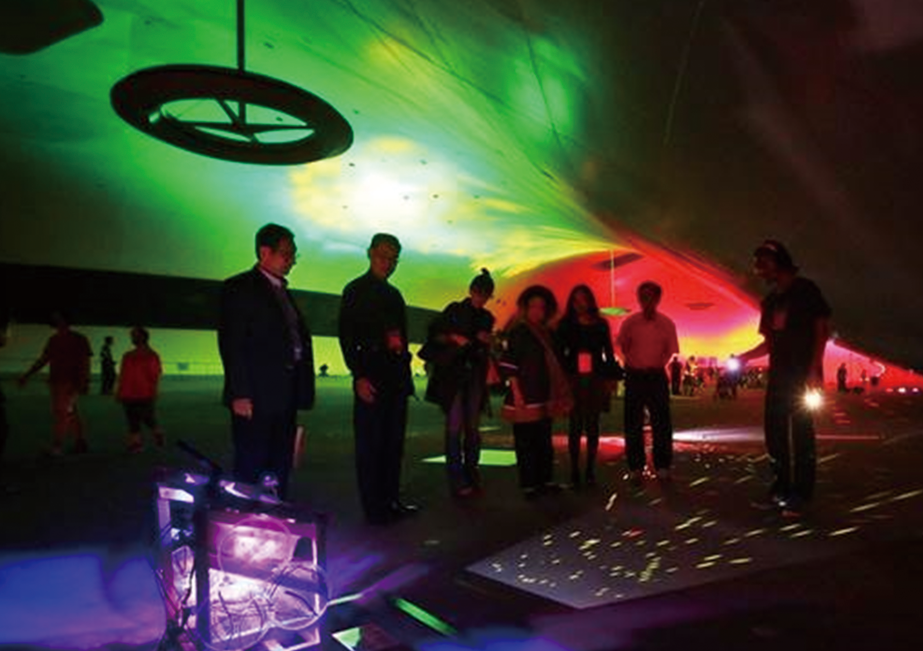
Enjoying the shade, chatting, and playing chess under the banyan tree are the most common social memories that people have. However, if those banyan trees have memories also, they have been standing for decades of years, experiencing the passage of time, the evolution of the environment, and the circulation of life. Through interacting with digital media, people are led back to experience the emotional memories that these banyan trees may have. When people enter this invisible tree and start making human sound, the tree will hear and fluctuated emotion, then according to the loudness of the sound, turn into fireflies flickering, streaming in the field as a response to the people who comes in.
➤ Time Cabin
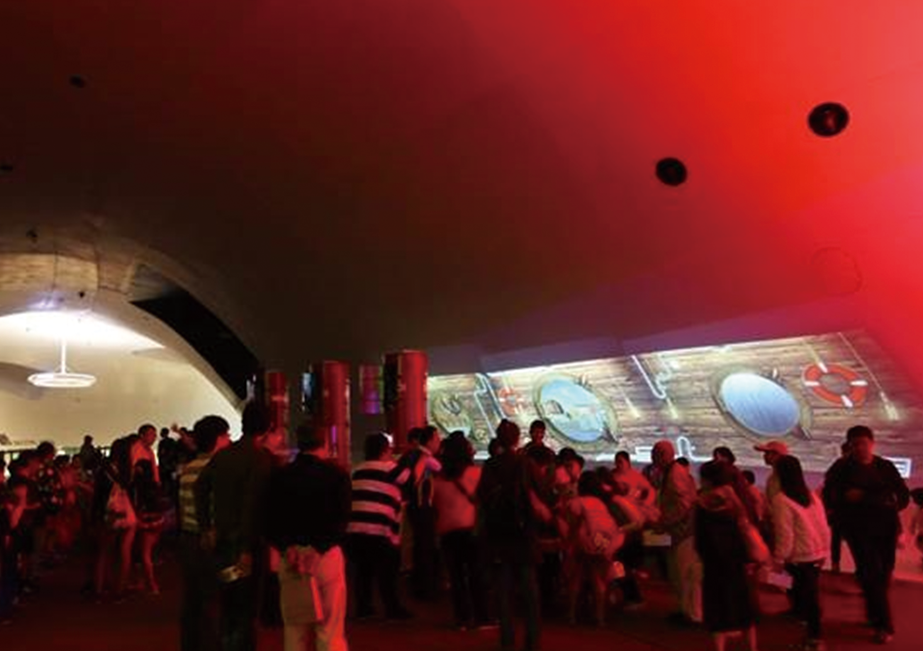
Walking out from under the banyan tree, what are the connection between us in Kaohsiung and the world?
Kaohsiung, an important port in Taiwan, has a unique city impression. By building a boat-like design “time cabin”, it takes the audience on a time traveling adventure all the way from 1895 to 2017.
Experience the changes of different ages of Kaohsiung through the three-cabin windows, allowing the audiences to immerse themselves in the interlaced time cabin of virtuality and reality, and revisit the historical torrent of the city.
➤ Diaspora
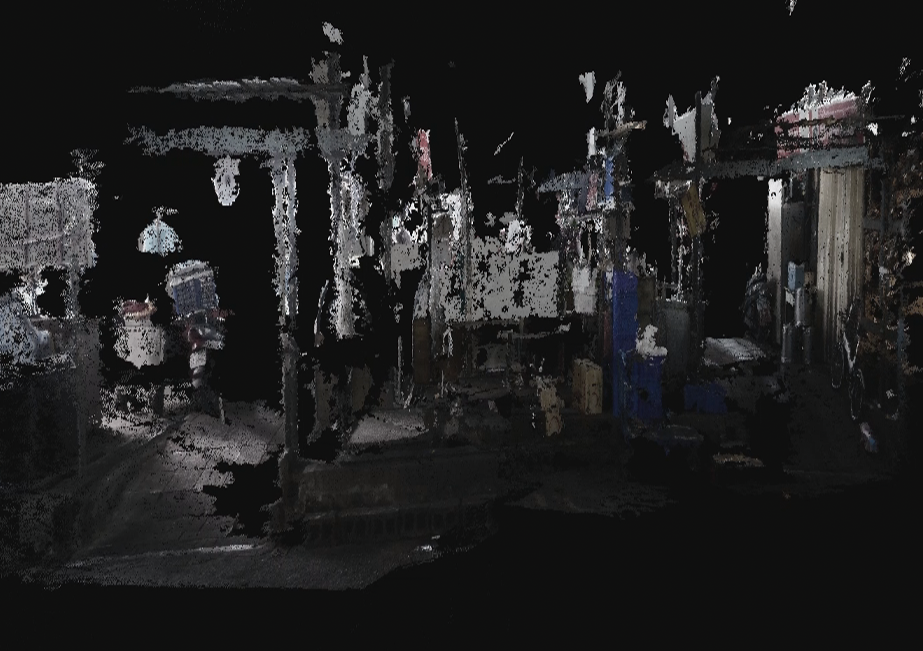
There will be residents in a place, as well as strangers who come here. Weiwuying used to be a military camp, and it was also another home for many expatriates. According to Salman Rushdie in Imaginary Homelands, losing one’s status is almost an act of wandering. However, “Fengshan First Public Retail Market”, once the famous “soldier’s city” in southern Taiwan, has become a symbiosis place for these wandering foreigners and local residents. These market scenes are 3D scanned and sealed up, then reorganized into a fragmented and blurred form of images and put into the VR world. When the audience wears the VR glasses, they will see a familiar morning market scene, but so fragmented and vague, to create a kind of emotional resonance of scattering.
➤ Smell of the Memories
At the end of the exhibition, we lead the audience to simply return to the discussion of “space”. As the French philosopher Gaston Bachelard emphasized in his book The Poetics of Space, space is not primarily a container of the three-dimensional object, but a medium that creates people’s experience and consciousness.
Other than the sense of hearing, sight, and touch transmitted by the air in the space, a sense of contradiction in the sense of smell is found. After receiving the external stimulus, it will re-internalize the perception and merge the past self-experience, and finally judge whether the smell is “fragrance or fumes”, and at the same time, it will again evoke people's memories or desires. Therefore, the smell is specially added into the creation of scenes and sounds, so the audience can regain memories and connect experiences, so as to reflect on the reasons that shape their feelings.

Contacts of Wonders of Art International
Email : Wondersoffice@gmail.com TEL : +886-2-2772-8528
Copyright © 2017. Wonders of Art International All rights reserved.